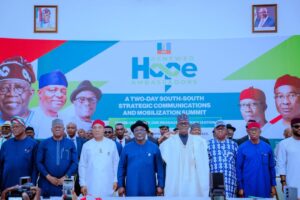

R-L: Victor Origho, Lawrence Okpewho, Okpesu Gideon, Onyem Aghaobodo, Ochuko Emudainohwo, Emmanuel Enebeli, Charles Aniagwu, Martyns Obiefuna in a group photo shortly after the occasion
By John Egie
Petty traders, and small and medium scale enterprises as well as companies with an annual turnover of less than N50million have nothing to fear about the new tax law due to be implemented in January 2026.
[the_ad id=”16914″]
This class of investors largely populated by market women, artisans, roadside hustlers and other young sole or joint ventures are exempted from capital-based taxes and company income taxes. The reason for the exemption is to encourage entrepreneurship, promote innovation and ease financial burden on small businesses.
Dr Ochuko Emudainohwo, FCA, Associate Professor of Accounting, Dennis Osadebay University, Asaba who was guest speaker at the 2025 Delta Online Publishers Forum (DOPF), annual lecture series gave the insight while doing justice to the lecture topic, “Nigeria’s New Tax Law: Implications and Opportunities for Businesses and Society “.
The event held yesterday, Thursday, November 27, at David’s Event Center, Asaba.
Governor Sheriff Oborevwori represented by Hon Charles Ehiedu Aniagwu, Commissioner for Information was the special guest of honour and chief host.
Chief Edward Obiefuna Martyns was chairman of the occasion while Mr Martins Onyem Aghaobodo Esq, Victor Fegor Origho and Barr Ikpesu Gideon Jade were members of the panel of discussants, moderated by veteran broadcaster, Lawrence Okpewho.
[the_ad id=”16918″]
Dr Emudainohwo thumped up for the President Bola Tinubu led administration for the tax law reform describing the 2025 New Tax Law as a strategic blueprint for inclusive economic growth capable of repositioning Nigeria for a more diversified and resilient economic future.
Noting that taxation remains one of the strongest instruments for national development, he said to understand the essence of the new tax law, citizens must first appreciate the context in which it was introduced.
He outlined key factors that necessitated the tax law reform to include: Nigeria’s declining oil revenue capacity which has become increasingly insufficient to sustain national development, a rising population that continues to exert pressure on public services.
He pointed out that with successive increase in annual fiscal budget estimates especially in capital expenditure, government also needs more money to execute infrastructural projects for societal development and this fund is gotten through tax.
The lingering economic shocks from COVID-19 pandemic, which exposed the fragility of Nigeria’s revenue system adds up.
[the_ad id=”16917”]
These challenges compelled the Federal Government to rethink its fiscal policies and strategies to pursue a more sustainable and inclusive approach to revenue generation.
The framework of the tax law consolidates taxes and company taxes with a single tax net, streamlining compliance and reducing administrative bottlenecks.
“The reform is pro-people, designed not only to boost government revenues but also to stimulate economic growth across various sectors. It emphasises transparency and modernization, enhances accountability, improves efficiency and minimizes leakages within the revenue system”, he said.
[the_ad id=”16920″]
One of the discussants, Victor Fegor Origho, a professional accountant, academic and consultant further allayed fears about implications of the new tax law reform saying the new tax law is for benefit of common Nigerians, being less beneficial to the government but opens more economic opportunities for small and medium scale entrepreneurs and hence, ” government reform of tax laws should not be seen from the perspective of colonialism that engage in oppression and extortion.
Early on, Chairman of DOPF, Mr Emmanuel Enebeli, in a welcome speech said the day’s conversation was not just about taxation but also about what Nigerians expected in return through Infrastructure, security and social services that directly improve the lives of citizens adding that it was important for governments at all levels to demonstrate value for revenues collected.